In an excavator, the Kawasaki K3V drives the boom, arm, bucket, and travel circuits — each loading the pump briefly and releasing. In a crane, the slewing circuit adds a qualitatively different demand: the pump must accelerate an entire revolving superstructure (in a large crawler crane, this can weigh 50-100 tonnes) from rest to slewing speed and then decelerate it to a precise stop. This requires the pump to respond accurately to variable displacement control signals at high pressure sustained across the full slewing arc.
PumpGrid refurbishes Kawasaki K3V and K5V crane pumps with extended pressure hold testing and specific verification of the servo control response — not just static pressure, but the dynamic response that crane slewing demands.
Why Crane Slewing Is Harder on the Hydraulic Pump Than Excavator Work
Slewing Start — Maximum Pump Demand
Accelerating the crane superstructure from rest requires maximum pump displacement and high pressure simultaneously. The inertia of the rotating structure creates a brief but intense load spike on the pump — far higher than a typical excavator boom lift.
Slewing Arc — Sustained Load
During the slewing arc, the pump maintains constant pressure against the slewing motor and counterbalance valve. Unlike a brief dig cycle, a 90-180° slew may take 15-30 seconds of sustained pump output — testing seal integrity and variable displacement control.
Slewing Stop — Braking Demand
Stopping the rotating structure precisely (to place a load accurately) requires the pump to modulate output while the braking circuit absorbs energy. Incorrect modulation causes the crane to overshoot or jerk — a safety issue with a suspended load.
This is why crane-application Kawasaki pump refurbishment must verify dynamic variable displacement response, not just peak pressure. A pump that holds 350 bar statically but fails to modulate correctly will cause uncontrolled slewing — a serious safety risk.
Available Kawasaki Crane Pump Models
| Kawasaki Model | Max Pressure | Displacement | Crane Application | Key Feature |
|---|---|---|---|---|
| K3V112DT | 350 bar | 112 cc/rev | Light mobile cranes, 25-40T | Standard tandem axial piston |
| K3V180DT | 350 bar | 180 cc/rev | Medium mobile cranes, 40-80T | Higher displacement tandem |
| K5V160DPH | 350 bar | 160 cc/rev | Kobelco CK160 crawler crane | DPH: dual-path control |
| K5V200DPH | 350 bar | 200 cc/rev | Kobelco CK200-CK300 crawler | DPH: dual-path control |
| K5V200DTH | 350 bar | 200 cc/rev | Large mobile cranes, 100T+ | DTH: through-drive variant |
| K3V112DTP | 350 bar | 112 cc/rev | Truck-mounted cranes | DTP: through-drive for tandem |
Model not listed? WhatsApp us your machine details — we source across the full Kawasaki range.
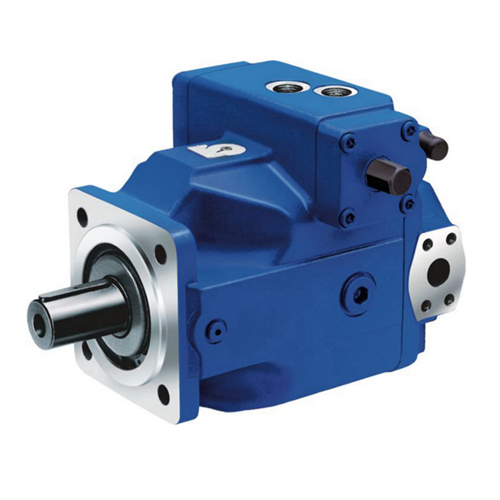
Our Kawasaki Quality Standards
Dynamic Slewing Response Verified
We test K3V crane pumps under simulated slewing load conditions — verifying that the variable displacement servo responds correctly across the full displacement range, not just at maximum. Erratic servo response under partial displacement is the most common failure mode in crane-application K3V pumps after refurbishment, and we test specifically for this.
350 Bar with 15-Minute Sustained Hold
Crane applications demand sustained pressure, not just peak pressure. We hold rated pressure for 15 minutes on every crane-designated Kawasaki pump — longer than our standard industrial test — to verify seal integrity under the sustained slewing conditions a crane experiences.
DPH and DTP Variant Identification
Kobelco CK cranes use the K5V DPH (dual-path) variant — which has a different control system than the standard K5V. We identify the exact variant from the pump nameplate before refurbishment to ensure the correct servo valve calibration and test protocol is applied.
3-Month Warranty with Safety Documentation
All Kawasaki crane pumps carry a minimum 3-month warranty. Written test report includes servo response data alongside pressure and flow readings — providing the safety documentation crane operators and site engineers may require for re-commissioning.
Warning Signs in Your Crane
Act on these early — delayed replacement risks secondary damage to cylinders, motors, and valves.